Overview
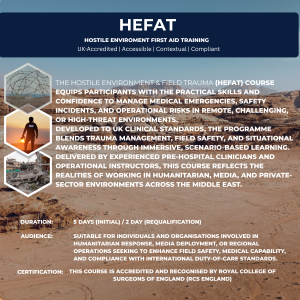
First Response Training for Field Staff is an innovative and modern alternative to the traditional First Aid at Work (FAW) course — designed specifically for NGO personnel and field-based teams operating in challenging, remote, or crisis-affected environments.
This course delivers practical, scenario-driven and evidence-based training tailored to the real conditions, challenges, and risks that NGO staff face during day-to-day field operations.
It introduces a clear, structured and rapid approach to casualty care that helps responders quickly identify and prioritise life-threatening conditions, while avoiding missed injuries or illness. It empowers staff to provide immediate, effective first-line care, buying time for advanced support and improving patient outcomes.
Our approach is hands-on, immersive, and scenario-based — proven to embed knowledge, build confidence, and ensure field teams retain critical skills they can apply under pressure. This style of learning has already been adopted by the emergency services and is now adapted to meet the needs of the humanitarian sector.
Duration :
3 days (18 hours) initial course
2 days (12 hours) requalification
CReated For :
- NGO and humanitarian field staff
- Team leaders and non-clinical frontline workers
- Staff operating in remote, high-risk, or crisis-affected environments
What you will learn:
-
Role and responsibilities of a field responder
Infection prevention and control
Calling for help and communicating with medical support
Scene assessment and safety
Casualty assessment and triage
Managing minor bleeding and injuries
Internal and external bleeding
Unconscious breathing casualty
Casualty with no signs of life (CPR/AED use)
Choking (mild and severe)
Stroke
Minor burns and scalds
Handover to ambulance/MEDEVAC
Incident reporting procedures
Sudden poisoning
Head injuries
Seizures
Chest injuries
Asthma attacks
Anaphylaxis
Acute coronary syndrome (heart attack)