The 2025 Resuscitation Council UK (RCUK) guidelines place renewed emphasis on early, high-quality intervention and acknowledge that many responders now work in settings where definitive medical care is significantly delayed.
Although the guidelines do not redefine the trauma-based “golden hour,” they highlight the increasing importance of structured, sustained care when evacuation is prolonged and advanced medical support is unavailable. This aligns closely with the realities faced in humanitarian operations, where responders must preserve life not for one hour, but often for many hours before transfer to definitive care becomes possible.
In trauma medicine, the “golden hour”, the first 60 minutes following a life-threatening injury, has long been understood as the critical period during which timely intervention dramatically improves survival.
In well-resourced settings, that principle still holds. But in many humanitarian operations, where evacuation is delayed and medical infrastructure is compromised, the golden hour is rarely achievable in practice.
Adapting the concept for these contexts is not simply a clinical adjustment; it represents a shift in how humanitarian teams think about preparedness, capability and self-reliance in the field.
The Origin and Evolution of the Golden Hour
The term originated from military medicine in the mid-20th century, later popularised by emergency physician R. Adams Cowie in the 1970s.
Decades of data from civilian trauma systems confirm that early haemorrhage control, airway management and rapid evacuation significantly reduce mortality.
However, this evidence presumes the presence of functioning emergency medical services, trauma centres and air- or ground-based evacuation within that first hour.
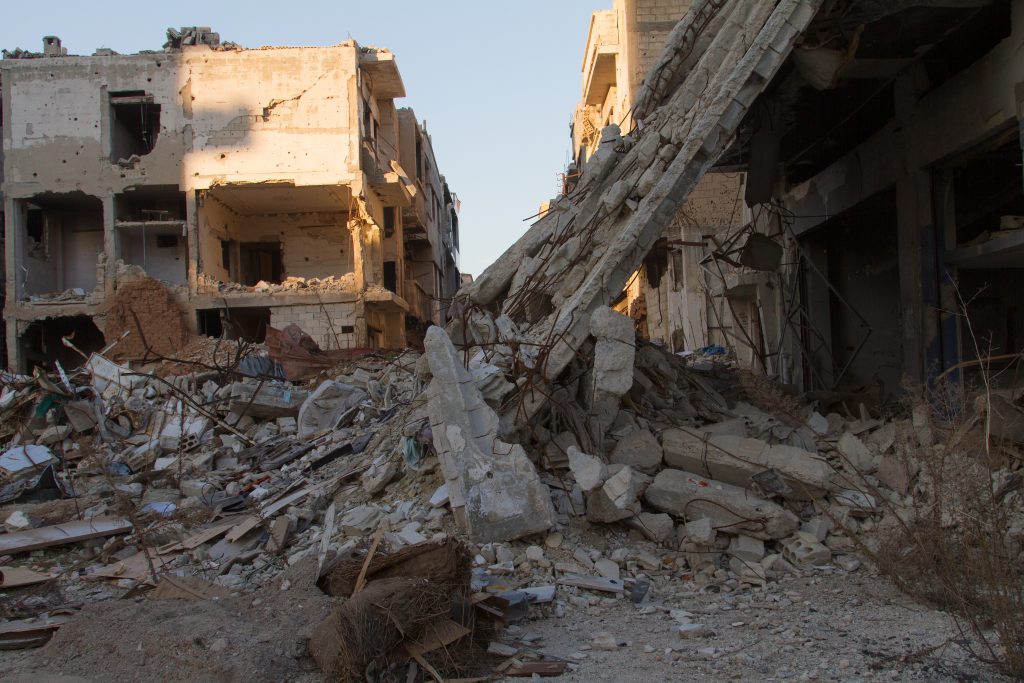
In most humanitarian environments, from northern Syria to South Sudan or Yemen — those systems are either degraded or absent.
What the Data Shows in Humanitarian Contexts
According to the World Health Organization’s Emergency Care Systems Framework (2024), more than half the world’s population lacks access to timely pre-hospital care.
In conflict-affected or fragile settings, the figure rises above 70%.
Field research published by the ICRC and Médecins Sans Frontières demonstrates that evacuation times in active conflict zones often exceed four to six hours, and sometimes days, depending on access and security conditions.
In such environments, the first responders are not ambulance crews but colleagues, community volunteers or NGO staff themselves.
This reality redefines the golden hour: it is no longer about transfer to hospital, but about sustaining life until definitive care becomes available.
From Hour to Horizon: The Concept of Extended or Prolonged Casualty Care
The UK’s Faculty of Pre-Hospital Care (FPHC) describe this adaptation as Prolonged Field Care , or Extended Casualty Care, managing a patient beyond the traditional pre-hospital timeline using limited equipment and personnel.
It involves:
• Continuous monitoring and maintenance of airway, breathing and circulation.
• Managing pain, bleeding and shock over extended periods.
• Prioritising communication, casualty documentation and staged evacuation.
These principles, once associated mainly with military medicine, are now increasingly relevant to humanitarian responders who may find themselves isolated for hours or days after an incident.
Implications for Humanitarian Training
Recent reviews by ALNAP and GISF highlight that many NGO staff receive basic first-aid or HEAT courses but lack training in extended trauma management.
Most standard curricula assume rapid evacuation, an assumption misaligned with operational realities in many humanitarian deployments.
Training programmes that integrate context-specific casualty-care scenarios, resource-limited decision-making and team-based response are proving more effective in building confidence and competence.
The WHO Emergency Care Toolkit (2024) also recommends tiered training models — empowering non-medical staff with life-saving interventions while reinforcing medical governance for clinical personnel.
Operational Lessons from Recent Crises
• Ukraine: Demonstrates the importance of locally trained responders and NGO staff capable of haemorrhage control and prolonged field care, supported by regional trauma systems.
• Gaza and Yemen: Limited evacuation routes mean teams often provide care through multiple handovers, relying on improvised equipment and locally trained medics.
• Sudan: Inaccessible terrain and security constraints underscore the need for multi-day casualty-holding capability until extraction is safe.
These experiences confirm that the traditional trauma-system model cannot simply be transplanted into humanitarian contexts; it must be rebuilt for them.
The Role of Regional Training Hubs
While field conditions vary, the underlying requirement is universal: responders need realistic, accredited, scenario-based training delivered in environments that mirror their deployments.
Regional facilities provide this balance: secure, accessible locations enabling clinical accuracy and operational realism without the cost and dislocation of overseas travel.
Such centres can maintain instructor recency, ensure governance under recognised frameworks and provide repeat access for refresher cycles, the cornerstones of sustained competence.
Rethinking the Golden Hour: From Speed to Sustainability
In humanitarian operations, speed alone is no longer the metric of success. The new measure is sustainability — the ability to preserve life over extended timelines, with limited support, until the system can re-engage.
Redefining the golden hour does not discard its principles; it expands them.
It recognises that the first hour remains decisive — but that the next six, twelve, or twenty-four hours may determine survival just as much.
Preparing teams for that reality is now central to humanitarian medical readiness.